LiCoO2
Lithium cobalt oxide · LCO
LiCoO2 is a stable, semiconducting layered oxide that serves as the primary cathode material in high-performance lithium-ion batteries.
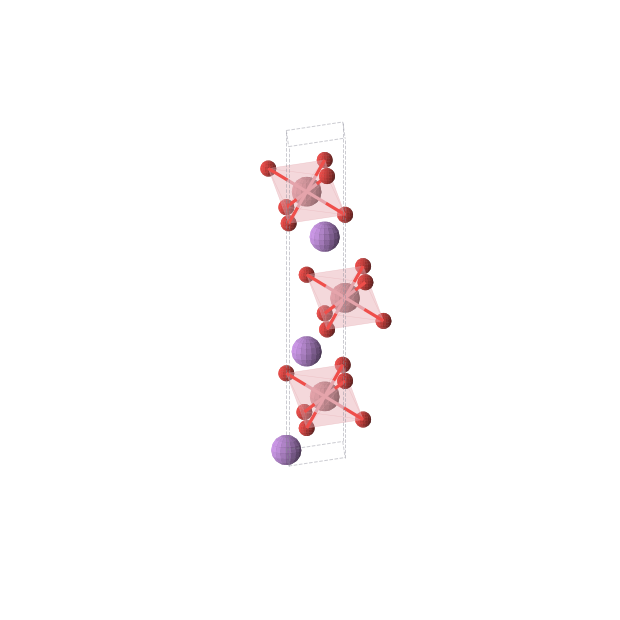
About Lithium cobalt oxide
LiCoO2 is a prominent member of the layered lithium transition-metal oxide family, characterized by its semiconducting electronic nature and robust thermodynamic stability. As a foundational material in energy storage, it provides a reliable structural framework for the reversible intercalation of lithium ions during battery cycling.
Its structural integrity and consistent electrochemical performance have made it a cornerstone of modern portable electronics. By maintaining a stable lattice throughout charge and discharge, this compound facilitates the efficient movement of charge carriers, ensuring longevity in high-energy-density power systems.
Key Properties
Cross-validated computational properties for Lithium cobalt oxide, aggregated across 3 databases.
Band GapEnergy needed to move an electron from the valence band to the conduction band. Lower or zero values tend to behave more metallic; larger gaps are more insulating or semiconducting.
Energy Above HullThermodynamic distance from the most stable set of competing phases. 0 eV/atom is on the convex hull; small positive values may still be experimentally accessible.
StabilityA plain-language summary of the best reported energy-above-hull result. It reflects whether the lowest-energy structure is on, near, or far from the stability hull.
StructuresCount of reported calculated crystal structures for this formula, including alternate polymorphs, source databases, and observed space groups.
Synthesis Routes
Literature-extracted synthesis procedures targeting LiCoO2.
Applications
Where Lithium cobalt oxide is used.
Patent Landscape
12 patents reference LiCoO2 or close compositional variants.
| Patent | Title | Assignee | Granted |
|---|---|---|---|
| 7959769 | Deposition of LiCoO2 | — | — |
| 11047049 | Low temperature method of forming layered HT-LiCoO2 | — | — |
| 6821679 | Fabrication method of LiCoO2 nano powder by surface modification of precursor | — | — |
| 5211933 | Method for preparation of LiCoO.sub.2 intercalation compound for use in secondary lithium batteries | — | — |
| 10030302 | Sintered body comprising LiCoO2, sputtering target, and production method for sintered body comprising LiCoO2 | — | — |
| 9887414 | Deposition of LiCoO2 | — | — |
| 10490866 | Method for acid dissolution of LiCoO2 contained in spent lithium-ion batteries | — | — |
| 6395426 | Non-aqueous electrolyte cell having a positive electrode with Ti-attached LiCoO2 | — | — |
| 10153142 | LiCoO2 sputtering target, production method therefor, and positive electrode material thin film | — | — |
| 5356731 | Molten cabonate fuel cell with sintered LiCoO.sub.2 electrode | — | — |
Frequently Asked Questions
Common questions about Lithium cobalt oxide, answered from cross-validated data.
What is LiCoO2?
LiCoO2 is a stable, semiconducting layered oxide that serves as the primary cathode material in high-performance lithium-ion batteries.
What is LiCoO2 used for?
What is the band gap of LiCoO2?
Is LiCoO2 a metal, semiconductor, or insulator?
Is LiCoO2 thermodynamically stable?
How many polymorphs of LiCoO2 are known?
How is LiCoO2 synthesized?
What elements does LiCoO2 contain?
Where does the data for LiCoO2 come from?
Related Research
How It Compares
Within the layered lithium transition-metal oxides class.
Within the diverse landscape of layered lithium transition-metal oxides, LiCoO2 is distinguished by its exceptional stability compared to more volatile or complex counterparts like LiNiO2. While materials such as LiMn2O4 offer different cost and safety profiles, LiCoO2 remains the industry benchmark for energy density and structural reliability in commercial cathode applications.
Related Compounds
Other Layered Lithium Transition-Metal Oxides in the database.
Data sources & attribution
- latticegraph — Lattice Graph Materials Intelligence Platform
Analyze LiCoO2 in the Lattice Graph platform
Polymorph comparison, confidence scoring, supply-chain risk, and patent monitoring — across 53 integrated data sources.
Explore the Platform →